Wellness
Your Brain on Silence: The Science Behind What Mindfulness Actually Does
New neuroscience research is clarifying exactly how meditation reshapes the brain — and Las Vegas's growing wellness community is paying attention.
4 min read
Wellness
New neuroscience research is clarifying exactly how meditation reshapes the brain — and Las Vegas's growing wellness community is paying attention.
4 min read

Eight weeks. That's how long it takes for a consistent mindfulness practice to produce measurable structural changes in the human brain, according to landmark research out of Harvard Medical School published in Psychiatry Research: Neuroimaging. Participants who meditated roughly 27 minutes a day showed increased gray matter density in the hippocampus — the region governing learning and memory — and a documented shrinkage of the amygdala, the brain's threat-detection center. These weren't self-reported feelings of calm. These were images on an MRI scan.
The timing matters. Stress-related disorders now account for more than $300 billion in lost productivity annually across the United States, according to the American Institute of Stress. Las Vegas, a city where service industry shift work, casino floor noise, and 24-hour schedules compress the body's recovery windows, sits in a uniquely high-pressure environment. The wellness conversation here isn't abstract — it's a practical response to a specific local reality.
The prefrontal cortex — the part of the brain responsible for decision-making, emotional regulation, and self-awareness — shows thickening in long-term meditators compared with non-meditators. Neuroscientists call this cortical thickening, and it's associated with better impulse control and reduced emotional reactivity. Separately, studies using functional MRI show that meditators display lower activity in the default mode network, the neural circuitry that fires when the mind wanders and ruminates. Less default mode activation correlates with fewer symptoms of anxiety and depression.
The body follows the brain. Regular mindfulness practice has been linked to lower cortisol levels, reduced inflammatory markers including C-reactive protein, and improved sleep architecture — specifically more time spent in slow-wave deep sleep. For Las Vegas residents working graveyard shifts at properties like the Bellagio on the Strip or MGM Grand on Tropicana Avenue, disrupted circadian rhythms are an occupational reality. Research published in the journal JAMA Internal Medicine found that a six-week mindfulness-based stress reduction program improved sleep quality scores by 26 percent among adults with chronic sleep disturbance.
The local wellness infrastructure has expanded to meet the demand. The Life Time fitness club inside the Downtown Summerlin complex on Pavilion Center Drive now runs a dedicated Mindfulness-Based Stress Reduction course modeled on the eight-week protocol developed by Dr. Jon Kabat-Zinn at the University of Massachusetts in 1979 — the same framework used in most of the peer-reviewed brain studies. Classes run Tuesday and Thursday evenings and cost $149 for the full program.
Further east, the Vegas Stronger wellness nonprofit, headquartered near the Arts District on Charleston Boulevard, offers free weekly drop-in meditation sessions every Sunday at 9 a.m., specifically targeting first responders, hospitality workers, and veterans. The organization served more than 800 participants in 2025. Tivoli Village in the Summerlin area hosts the quarterly Desert Mind Festival, which last convened in April 2026 and drew instructors certified through the Mindfulness-Based Professional Training Institute.
Apps have entered the picture too. Headspace reported in early 2026 that Nevada ranked among the top ten states for new subscriber growth over the previous 12 months, with Las Vegas zip codes representing the largest share of in-state signups. A monthly Headspace subscription runs $12.99, while Calm's annual plan is $69.99 — lower entry points than studio memberships for residents still testing the practice.
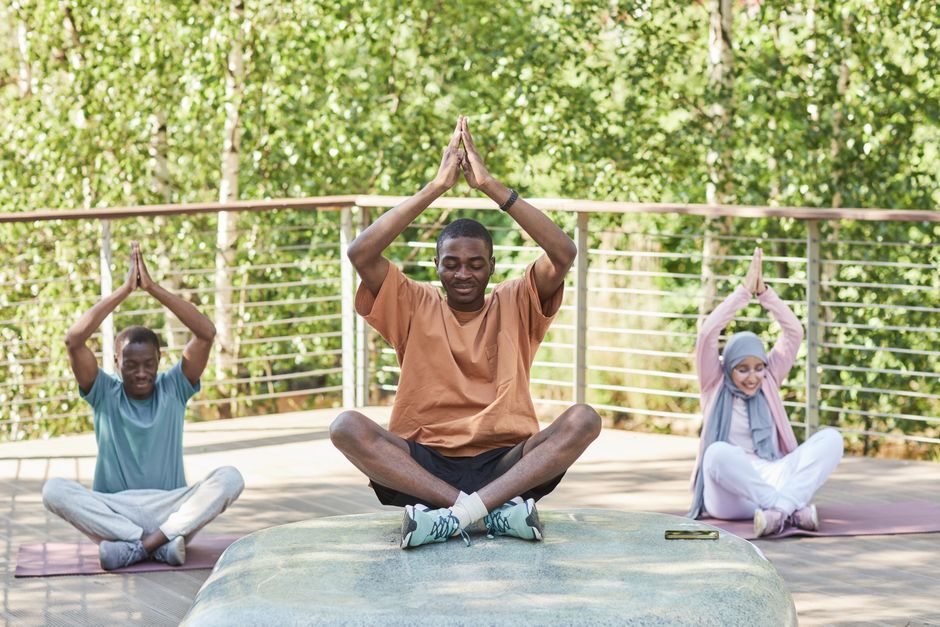
The practical starting point is straightforward: researchers consistently find that five to ten minutes of focused breath attention daily, sustained over eight weeks, begins to shift baseline stress reactivity. No special equipment, no particular spiritual framework required. For anyone in Las Vegas looking to go deeper, Vegas Stronger's free Sunday sessions and Life Time's structured MBSR course offer guided entry points with trained facilitators. As always, anyone managing a clinical diagnosis — anxiety disorder, PTSD, depression — should loop in a local mental health professional before treating meditation as a standalone intervention. The science is real. The dosage still needs to be calibrated to the individual.
Wellness

Wellness
Wellness

Wellness
About this article
Published by The Daily Las Vegas
Spread the word
Daily brief
Free, in your inbox before 7am. Weekdays.
The Daily Network — local news across Australia