Property
How Much Rent Is Too Much? The 30% Rule in Practice
Las Vegas renters are hemorrhaging well past the old affordability threshold — and the math is getting harder to ignore.
4 min read
Property
Las Vegas renters are hemorrhaging well past the old affordability threshold — and the math is getting harder to ignore.
4 min read
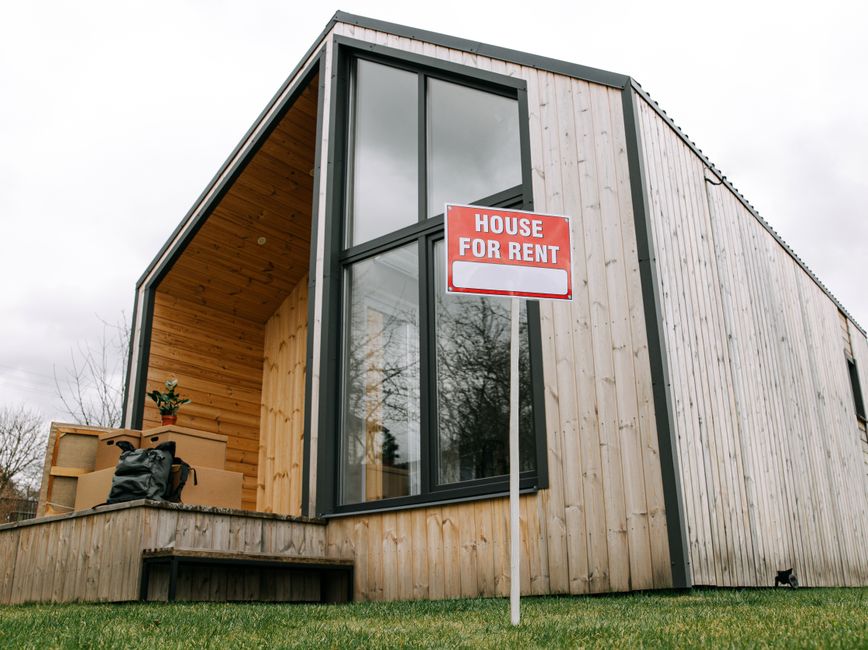
The median rent for a two-bedroom apartment in Las Vegas hit $1,847 a month in June 2026, according to data tracked by the Nevada Housing Division. To stay within the federal government's long-standing 30% affordability guideline, a household would need to earn at least $73,880 a year. The median household income in Clark County sits closer to $62,000. Do that arithmetic and roughly a third of Strip-adjacent renters are already technically cost-burdened — before they pay a utility bill.
The timing could not be sharper. As the country marks its 250th birthday and brutal heat cancels outdoor events from coast to coast, Las Vegas is baking under triple-digit temperatures that drive electricity bills toward $300 a month in summer. Those costs don't show up in the headline rent number, but they absolutely show up in household budgets. The 30% rule — born from a 1969 federal public-housing statute and embedded in nearly every mortgage underwriting guideline since — was never designed to account for $0.14-per-kilowatt-hour desert summers.
The squeeze is uneven across the valley. In the Arts District along Charleston Boulevard, studios that rented for $1,100 in early 2023 are now listed at $1,450 or more. Henderson's Green Valley Ranch corridor, once marketed as a more affordable alternative to the urban core, has seen asking rents for three-bedrooms climb past $2,200. Summerlin, the master-planned community on the valley's western edge, commands even more — some complexes off Town Center Drive are listing units north of $2,500 for a standard two-bedroom.
Nevada Legal Services, which runs a statewide tenant hotline, reported a 22% jump in calls related to rent-burden and eviction risk between January and May 2026 compared with the same period last year. The organization's Las Vegas office on West Sahara Avenue has added two additional housing counselors this year to manage demand. The Southern Nevada Regional Housing Authority, meanwhile, has a Section 8 voucher waitlist that hasn't formally opened to new applicants since March 2024.
The buy-versus-rent calculation is barely cleaner. The median sale price for a single-family home in Las Vegas was $435,000 in May 2026, per the Las Vegas Realtors association. At a 30-year fixed rate hovering around 6.7%, a 10% down payment produces a monthly principal-and-interest payment of roughly $2,535 — before property taxes, insurance, or HOA fees that in communities like Inspirada in Henderson can add another $250 to $400 monthly. Owning, for most working households, is not the escape valve it once was.
Housing economists have spent years poking holes in the 30% threshold. The rule treats a household earning $40,000 and one earning $120,000 identically, which is plainly absurd — a family paying 30% of $40,000 on rent has $2,333 left each month for everything else, while a family paying 30% of $120,000 has $7,000. The Center on Budget and Policy Priorities has argued for years that lower-income renters need to stay well below 30% to cover basic necessities, while higher earners can comfortably exceed it.
In practical terms for a Las Vegas renter earning $55,000 a year — close to the service-industry median in Clark County — the 30% ceiling is $1,375 a month. Finding a habitable, safe two-bedroom apartment at that price in 2026 means looking hard at North Las Vegas neighborhoods near Carey Avenue, or older stock in the Huntridge area east of the Strip, where rents remain slightly below market average but are climbing fast.
The Nevada Legislature passed Senate Bill 181 in 2025, which created a modest renter assistance pilot program through the Department of Business and Industry, but funding covered fewer than 800 households statewide in its first full year of operation. Advocates are pushing for an expansion in the 2027 session. Until then, the practical advice from housing counselors is blunt: if rent plus utilities exceeds 35% of gross income, start building an emergency fund immediately and document everything with your landlord in writing. The margin for error in this market is thin, and getting thinner.

Property
Property
Property
Property
About this article
Published by The Daily Las Vegas
Spread the word
Daily brief
Free, in your inbox before 7am. Weekdays.